Sunday, September 5, 2010

Madai Cave - where fortune falls from above

Its Sunday again. Not a beautiful Sunday - little sunshine, cloudy and rainy. But the showering rain does not stop us from making a 85 kilometers drive to Madai Cave to see a stunning and exciting event - the harvesting of Birds Nests.

The harvesting of these bird nests is a hazardous job. The nests are collected from the high, dark cave walls by young collectors who have the skills and guts to climb the height.

The swiftlets build their nests inside the caves hundred of meters high up.

In Madai Caves, there are 2 directions to reach the bird nests - from the cave floor or from the cave roof.

The highest cave ceiling is 200 meters high. A height too extreme for using just bamboo poles to reach the top. But the collectors have an easier and more economical way - that is to enter the cave where the swiftlets birds enter - the many small openings on the top of the cave and hill. Using long ropes securely fastening one's end to rocks and big trees outside the opening, the collectors will climb down onto the cave.

Those collectors approach from the ground will use bamboo poles, ropes or bamboo ladders attached to steep walls. These are equally stunning.

This is a traditional occupation of the Idahan people and this skill of nest collecting is passed down from generation after generation. But now, recent Malaysian economy successfully brought a better living by bringing up a better educated young generation who seek a better and more secured profession in towns and cities.

Collectors climb up on shaky bamboo ladders in total darkness caves to “mine” the nests.
Naked eyes could not see them working up there, we can only see bright lights moving high up the cave walls.  The above 2 images are from a same photo. The left picture is the original photo showing how dark it still is even though after using a powerful flash. The right is after using Adobe Photoshop to brighten it up reviewing the bamboo ladder and ropes hanging high up 100 meters above. Only those guys with great courage are able to reach such unreachable rocks at that distant height.


To reach the nests 100 meters above, bamboo-rattan ladders with wood rungs are hung from the ceiling anchored by gaps in the cave wall. At the top of the ladders, collectors fasten themselves to the bamboo with safety belts. Sunlight from the main entrance is dim and could not reach them, their alternative light source is their battery powered head-torch worn on their heads. Nests are scraped from the wall and put into a basket hung on the ladder. Occasionally, a few of nests would miss the basket and dropped off and down to the cave floor 100 meters below where dozen of Fortune Seekers would fight their way to captures this "treasure" dropping from above.


Above : One of the collectors who climbed the high wall in 1st and 2nd photo. Climbing up itself is stunning but how to bring their ladders up and securely faster to the cave wall is another wonder.

Photo below: Bamboo ladders are laid neatly at cave entrance ready to be carried up to the cave wall to reach greater height.


Nest Collectors collects any valuable nest they can reach. If there are eggs or babies in it, they just removed them and throw them down to meet their fate. No one seems guilty of  leaving these immature small bird dead but keen to rob off their nest constructed with that of salivas and feathers. Here, the value of God’s creation redefines. A case where a living creature's own discharged saliva is far more treasured then its life. How do you feel when you come to such place on earth where you spit your saliva to the ground to see swarm of human rush to grab and fight for that bit of your discharge but however leaving you dying without any one sympathy for you life? This shows how valuable these nests are - more valuable than priceless lives where they risk their own lives to get hold of these bunch of faeces and feathers.

Market for bird nests are booming. Prices have doubled in recent years. China has remain the biggest importer of birds' nests. The value of the nest has become so great that collectors no longer wait until eggs or chicks depart the nest. Both are simply discarded and the nest taken. See photo below.


Photo above:  A baby swiftlet and its nest scraped off from the wall. This chick, being not yet matured enough to fly, will die of starvation. While this baby swiftlet is left abandoned in Madai Cave floor to die, its nest would be sold at around Rm20.00 to a middle man who full time works doing a cleaning process carefully by removing all the feathers leaving behind the white thin gelatinous strand for exporting to China. By the time this raw unprocessed nest reached the Shanghai restaurant in the form of clean dried and white delicacy, the cost can easily reach Rm200.

A fully grown Swiftlet is about the size of a sparrow. They are found in Southeast Asia. During the breeding season, the male swiftlet bird would regurgitates a long, thin gelatinous strand from salivary glands under its tongue to wound into a half-cup nest which bonds like quick-drying cement to the inside of a cave wall.  The female would lay 1 ege which takes 1 month to hatch.


The nests are tasteless and so are usually served in soup mixed with chicken, spices and sauce.  For centuries in China these nests have been considered nourishing as well as a booster of health for the sick and aging; they are even believed to be an aphrodisiac.


Tuesday, August 31, 2010

The Big Tree in Kalabakan

The Big Tree in Kalabakan

31th August, 2010 - Malaysia National Day (Independence day). A public holiday so we are free from school and work. We used this opportunity to make our first trip to Kalabakan. An unknown plantation town to many people. Kalabakan village only consist of a few wooden sundry shops, several wooden house, a memorial, an army camp, oil plantations, open market and a graveyard. This place has a potential to become a fast developing township because it is near to the sea, has a wide area and near to Indonesia and Kota Kinabalu.

This is the first time for my dad, sister and I to visit Kalabakan. I found out if we go straight and did not turn in to Kalabakan, we would reach Kota Kinabalu and the Lost World Of Borneo - Maliau Basin.

On our way back we spotted this handsome tall tree and could not resist stopping by to have a close look. It is surrounded by thousands of hectares of oil palm plantations. He hope the plantation management will protect it.

Tawau is well known for keeping some of the tallest tropical trees in the world. In fact the tallest tropical tree in the world is found in Tawau Hills Park and we visited that tree last week.

Photo above : This tree we visited today is one of the tallest trees in the region.

Photo below :
Borneo's Big Trees
as recorded in the National Geographic magazine, July 2006 edition.

Photo image from the National Geographic magazine, July 2006 edition.


NG GRANTEE
Borneo's Big Trees

Some boys never grow up. They just climb taller trees—then work to protect them.

A team led by grantee Roman Dial of Alaska Pacific University climbed a Koompassia excelsa, actually a member of the pea and bean family, that towers above an oil palm plantation in northeast Borneo. This 268-footer ranks among the tallest tropical trees known.

"It was sad to look from the top," says Dial, "and realize that this represented what remained of the tallest tropical rain forest in the world. It felt like climbing a redwood in a cornfield."

He hopes that tall trees in a nearby region will eventually be conserved as part of a big tree park.

----Michael Klesius

Saturday, August 28, 2010

Great Flood in Tawau

I woke up in the morning today and get prepared to go to school. It was raining outside. My bedroom window were wet with raindrops -- it only gets wet when it rains heavily. I remember that there was loud noise outside at three o'clock at dawn that woke me up. It was noises from Muslim drummers and singers outside, they were marching around the neighbourhood to wake up the Muslims to get ready to fast for another day. At that time, it was not raining yet.

I carried along an umbrella with me to the bus stop because it was raining heavily. The air was humid and everything around he are wet, including the bus stop seat. My ride came and I'm on my way to school when the first sign of flood appeared. The oil palm tree plantation outside my housing estate area were flooded with muddy water. This convinced me that the rain was heavy. But afterwards I saw a bus stop which half of it was covered in water, this makes me realized that rain was really very heavy.

On my way to school, I passed by many housing estate and shops in Sin On Road are flooded with about 50cm of water. The drains are more than full. The reason is clear about Why didn't the drain worked properly  in flowing rain water away. There is a huge pile of rubbished and natural matters floating on the main drain in Sin On - This is the reason, littering and dumping wastes into the drain causes drain blockage and so the waters can't flow away easily and thus flooded the area. If the people do not want any more minor floods like this next time, they should stop throwing wastes into drains or simply anywhere.

All buildings in Sin On on my way to school suffered from flash floods (especially Taman Fook On), except a few lucky ones like Calvary City Church (probably God help the church for being faithful) and a night restaurant there. Even my school was a victim. The grass land in the middle of my school and school car parks are covered in centimeters of "chocolate drink"-(you know what I mean). Several students are late to school because their house are flooded. The school principals know about this issue and delayed the examinations for 30 minutes. While we students are having exams, the school workers outside were having fun cleaning up the school.

On my way back from school, I saw a tumbled big tree in a park in Sin On, this is caused by powerful winds that came with the heavy shower this morning. The worst flood happened in Tawau is definitely no match  with what happened today-(I think). This is the worst flood I had ever seen in my 12 years in Tawau. Luckily the place where I live is located on a high place where it won't flood easily here cause the rainwaters will flow down to the oil palm plantation below.


Sorry for any inconvenience caused, because there aren't any photographs to show to you all.

Tuesday, August 10, 2010

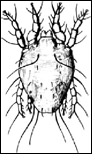
What are House Dust Mites ?

What is a House Dust Mite ?
House Dust Mites (Dermatophagoides) are tiny mites. They are a related to spiders instead of fleas. Their size are about one-third of a millimetre long. they feed on human skin flakes and bodily secretions in dust. They colonise houses, especially in warm, humid areas. They tend to live in carpets, mattresses, pillows, soft furnishing and other things which shelter them from sunlights.


Are House Dust Mites Harmful to us ?
House Dust Mites cannot directly harm us. 
But Dust Mites and their feces can become airborne and are one of the most common indoor allergens. That is, most persons diagnosed as being allergic to “house dust” are actually allergic to the dust mites whose bodies and feces are major components of dust. Roaches and dust mites have also been implicated in triggering asthma attacks, rhinitis and eczema. But, unlike rodent mites, itch mites and chiggers, skin irritation is rarely caused by exposure to dust mites. Although they may “hitchhike” on clothing, dust mites do not live on people.


What eat House Dust Mites ?
There are no specific predators of dust mites but anything like a small spider would undoubtedly eat one if it found it. If the question is "are there any natural enemies that can be used to control dust mites" the answers is I don't think there are any.


Source from:
http://www.idph.state.il.us/envhealth/pcmites.htm
and
http://en.allexperts.com/q/Entomology-Study-Bugs-665/2009/5/dust-mites-2.htm#b

Thursday, July 1, 2010

Occasions for JULY

There are less activities for the month of JULY. Ths month in school, we have great activities like planting tree and marathon. The most special day this month is the Birthday of my school - Sabah Chinese High School.


  • 2nd July (Friday) - Tree Planting Day in School


It is planting day in school today. Early in the morning, all the students and teachers are asked to gather at the basketball court. We are taught how to plant and which to plant. After about 15 minutes, we left the court and started the planting. Every class have several hibiscus plants to plant nest to the big drain at the stony car park beside the school. Each class are separated into different group. My group consist of 5 students - Me, Yon See Kee, Voon Zhi Chee, Tian Yeek Guan and Tommy Ho. We brought our own planting tools and gloves.


Other than planting, we also pour a secret chemical into the big drain and like magic, the dirts in the drain cleared away. The secret chemical is dark brown in colour. There is no English nor Scientific name for this enzyme, in our school it is just called 酵素. Several month before, each classes made their own enzyme with


  • 3rd July (Saturday) - School 46th Anniversary
Today is Sabah Chinese School's birthday. My school is now 46 year old. It is a school break today for teachers and students of my school. However, there is a "birthday celebration". Unfortunately, I did not went to the celebration but I know they have performances at the basketball field.


  • 4th July (Sunday) - School Marathon around Sin On Road
Although today is Sunday, we still had to go to school. The school held this marathon for donations. Every school student must join this marathon except for exceptional case. This marathon is also open to outsiders. Several old men joined in and ran along with us. There are three routes. The longest route - 7km, is for boys. The 5km route is for girls. The shortest route - 3km, is for the VIP - Very Important People.


I got position about 150++ of all the Senior Class (Secondary 4-6) boys.


  • 5th July (Monday) - One Day Break
One day break from school for us to rest at home after the marathon. Almost all those who participate got muscle soreness caused by the lactic acids in our muscles, including me too. I had difficulty in moving for 3 days.


More about Lactic Acid:
http://www.scientificamerican.com/article.cfm?id=why-does-lactic-acid-buil


  • 12th (Monday) - 17th July (Saturday) - Chinese Week in School
This whole week in school, all the students must speak in Chinese. There are Chinese calligraphy competition in school too. Three best calligrapher from each class are awarded with a small trophy and their works are posted and exhibited in front of our school hall.


  • 20th July (Wednesday) - ICAS English Examination
I am more confident in this year's English ICAS examination. There are many difficult and challenging questions. There are also tricky questions too. I hope I can get a better result compared to last year's English ICAS Exam. Last year, I only get 21 questions correct over 60 questions. Not Bad Huh!